Core Area 4: Communicating and Working with Others
Candidates should demonstrate their knowledge and skills in communication through working with others. Statements could describe the way in which your work involves collaboration, for example through participation in a team or acting as an interface to other groups. Also discuss how you disseminate your practice, for example through presentation or publications.
This section can help you directly address some of the CMALT core principles: you might discuss how you communicate to keep up to date, how you learn from peers and colleagues, or how you disseminate your practice, for example through presentation, publications, or other forms of communication. You may also choose to discuss how you select appropriate forms of communication and utilise different technologies.
Relevant evidence might include reflection on collaborations with others and testimonials from colleagues, or evidence showing your activity within a team process, how you have brokered support for a particular initiative (for example from a technical or legal support service), or how you have worked with others to solve problems. Where your evidence involved collaboration, please acknowledge the contribution of others; and remember that it is your responsibility to ensure that evidence is appropriately anonymised and/or that appropriate permissions have been obtained.
CMALT Guidance 2019
Description
In my role as a Digital Learning Designer, communication and collaboration are essential aspects of daily practice. I routinely support academic staff, professional services, and external assessors through various platforms. Email is the most common form of contact—both via a shared team inbox for general support requests and my personal inbox for direct queries. I also use Zoom extensively, as it enables face-to-face communication and the ability to share screens. This is particularly useful when walking through complex tasks in Moodle or PebblePad. Microsoft Teams is used for team collaboration, especially around documentation, planning, and coordination. I also use Discord as part of my involvement with external communities such as Educators in VR and Zoe Immersive, where informal and real-time discussion supports knowledge sharing across international participants 🔵CP4.
My role involves collaboration across multiple departments. I sit on Teaching, Learning and Quality Committees (TLQC) for both Science, Engineering and Maths (SECaMs) and the School of Geography, Earth and Environmental Sciences (SoGEEs), where I advocate for the use of appropriate digital tools and contribute to discussions on digital pedagogy. I’ve also attended Chemistry team meetings to advise on the use of immersive technology in the teaching of complex scientific concepts and large datasets. I’ve delivered team training to academic staff in Health, Education, and Nursing on how to use 360 cameras, Moodle, and PebblePad effectively to enhance the learning experience 🔴CP1 & 🟢CP3.
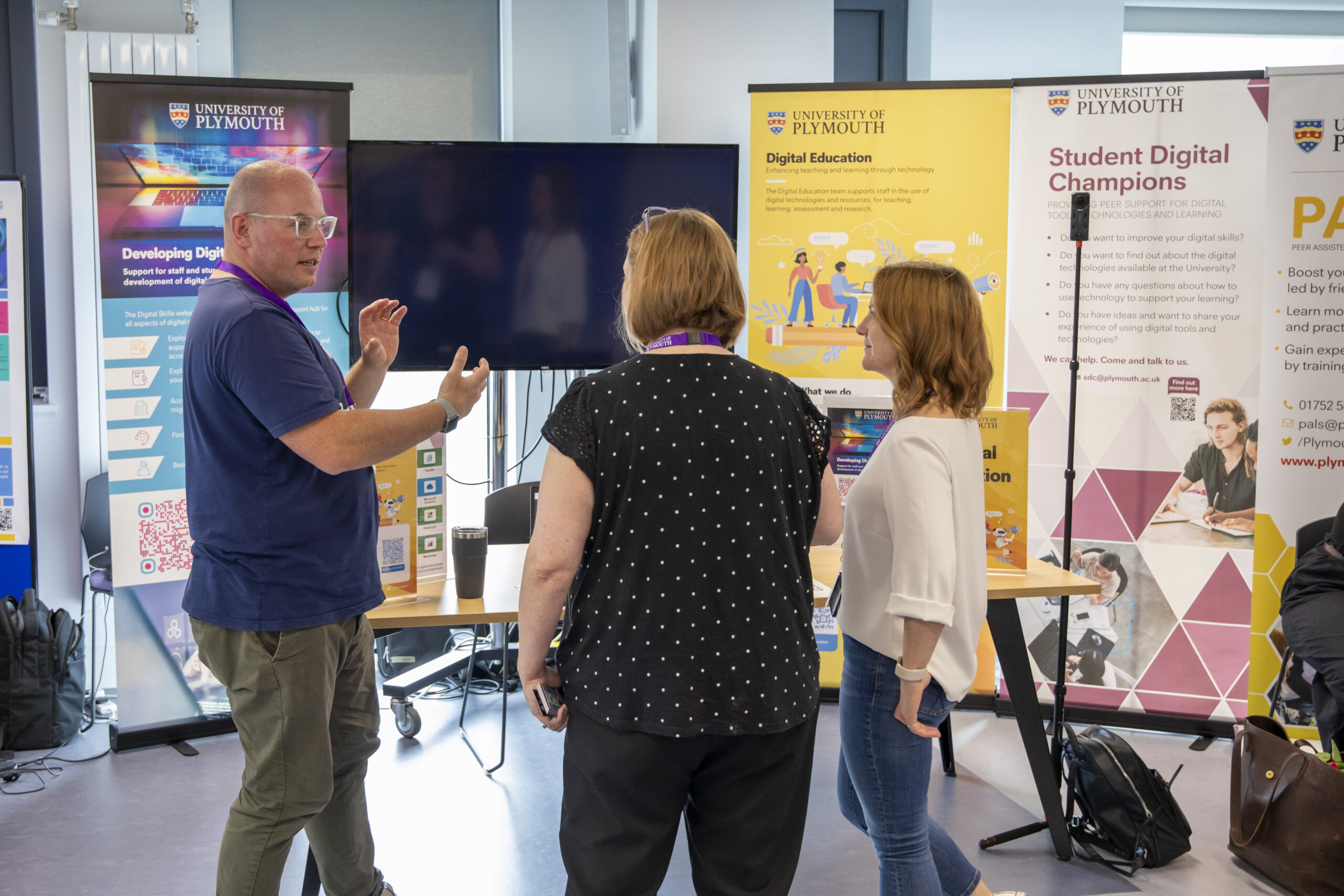
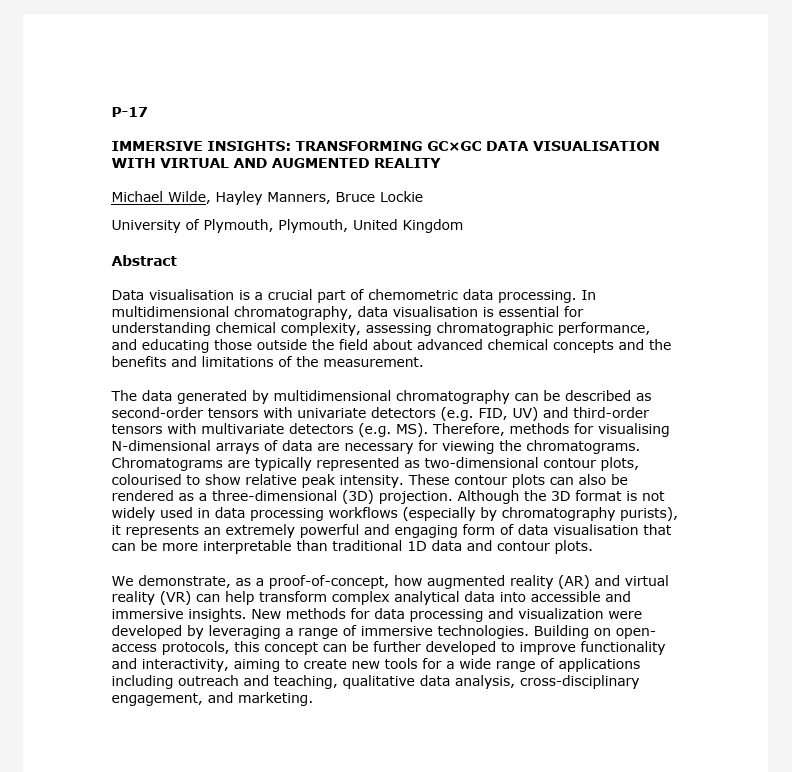
I contribute to dissemination of good practice within my institution through participation in the University of Plymouth’s Teaching and Learning Showcase, where I supported the Digital Education team in highlighting innovative uses of learning technologies. While I did not present personally at the 16th Multidimensional Chromatography Workshop in Liège, Belgium, my work on immersive technology was presented and acknowledged in the abstract, demonstrating how my input has contributed to wider research and public engagement. In addition, I am an active participant in the NHS Simulation and Immersive Technologies group’s Virtual Reality in Education working group, helping to explore and share uses of immersive learning in clinical education contexts 🟡CP2 & 🔵CP4.
Reflection
Effective communication and collaboration have been key to my ability to support and enhance teaching practice. Drawing on Shannon and Weaver’s Communication Model, I recognise the importance of clarity in message encoding, choosing the right channel for communication, and managing ‘noise’, such as technical glitches or assumptions about digital literacy. My approach to support is responsive, using the most effective platform for the situation: screen-sharing on Zoom for demonstrations, asynchronous Teams messages for coordination, and community platforms like Discord for peer learning 🔴CP1.
Collaboration with different departments and external partners has not only supported staff but also enhanced my own professional practice. These interactions give me valuable insights into diverse pedagogical needs, enabling me to translate digital tools into meaningful teaching practices 🟢CP3. By engaging with groups like Educators in VR and the NHS working group, I stay current with sector-wide developments and bring that learning back into institutional contexts. These experiences help me act as a conduit between emerging practices and practical implementation 🟡CP2.
Being part of University-level committees and cross-disciplinary initiatives has given me opportunities to advocate for thoughtful integration of digital learning tools. Through these collaborations, I’ve helped foster shared understanding and decision-making around platform use, design, and accessibility. The ability to communicate complex ideas clearly, while listening to the needs of academics, has been central to this work 🔵CP4.
Evidence
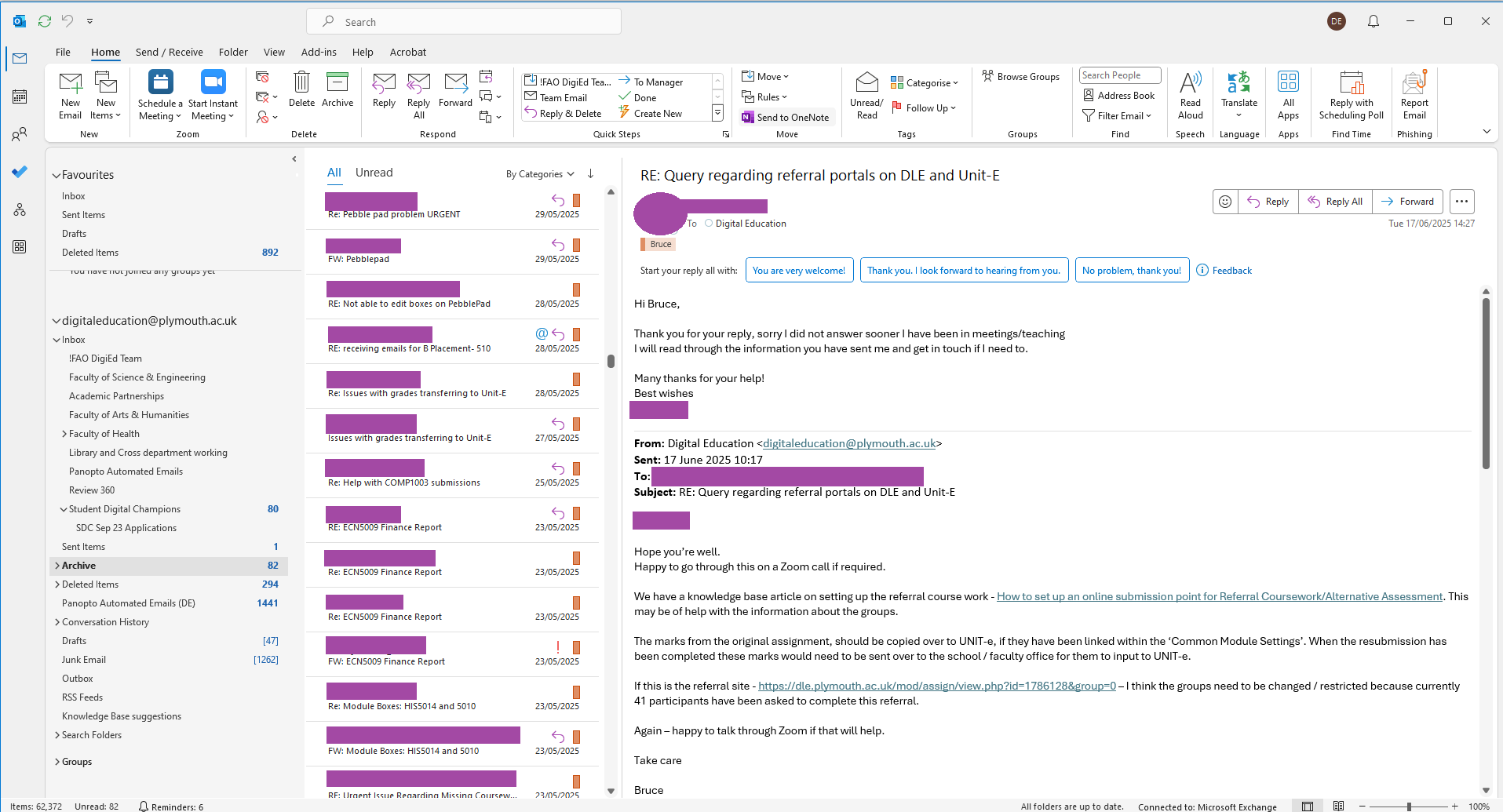
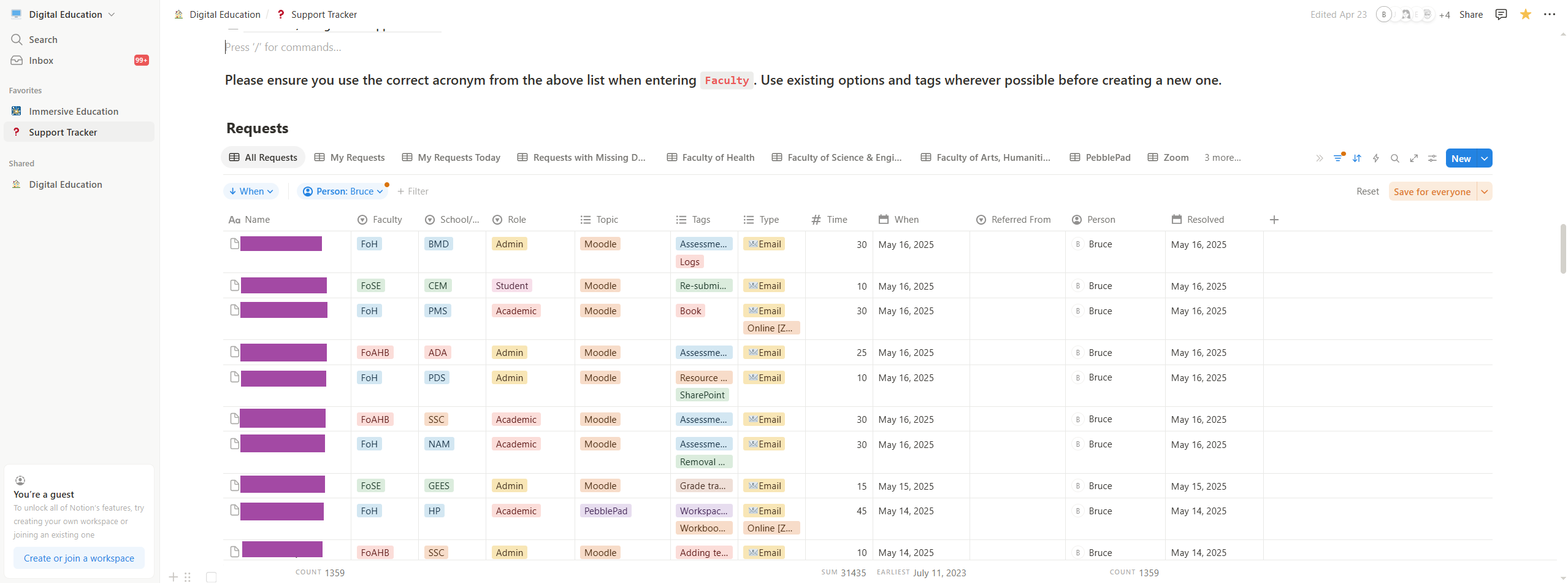
Digital Education – Inbox and Support Tracker
These screenshots show the Digital Education shared inbox and support tracker used to manage and respond to staff queries. They demonstrate my role in triaging requests, coordinating responses across the team, and providing timely support to academic staff, ensuring effective communication and continuity of service.
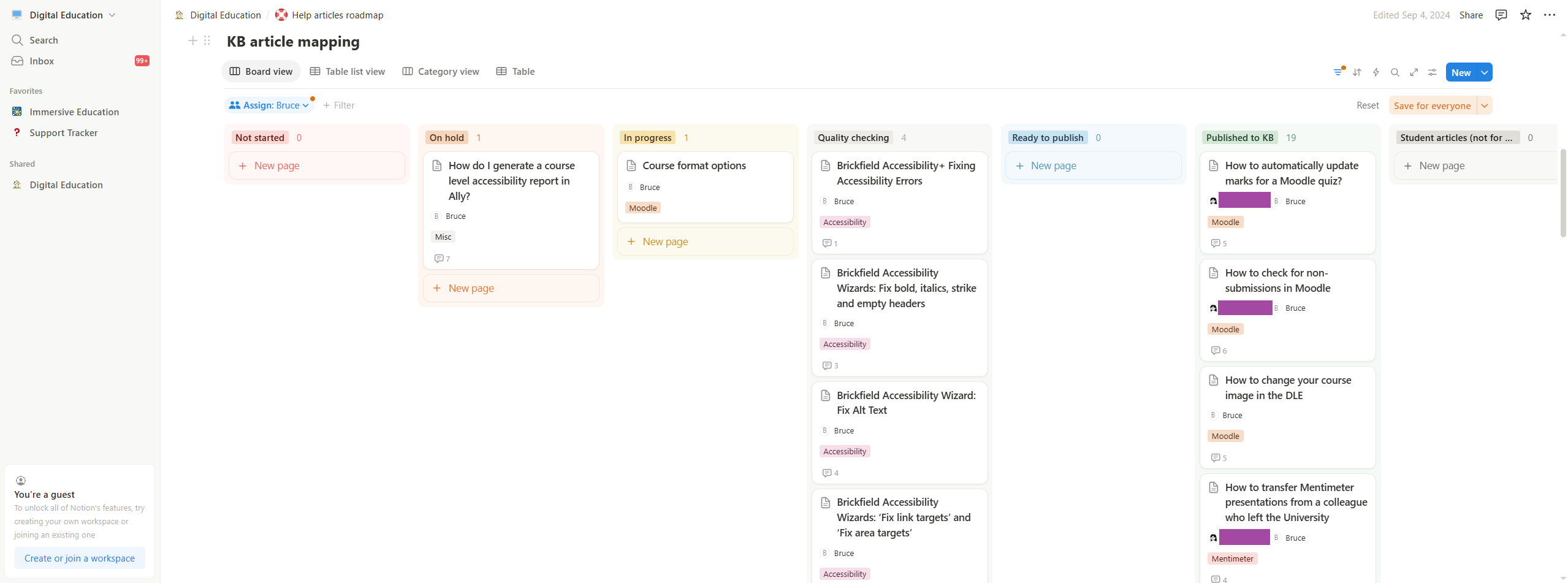
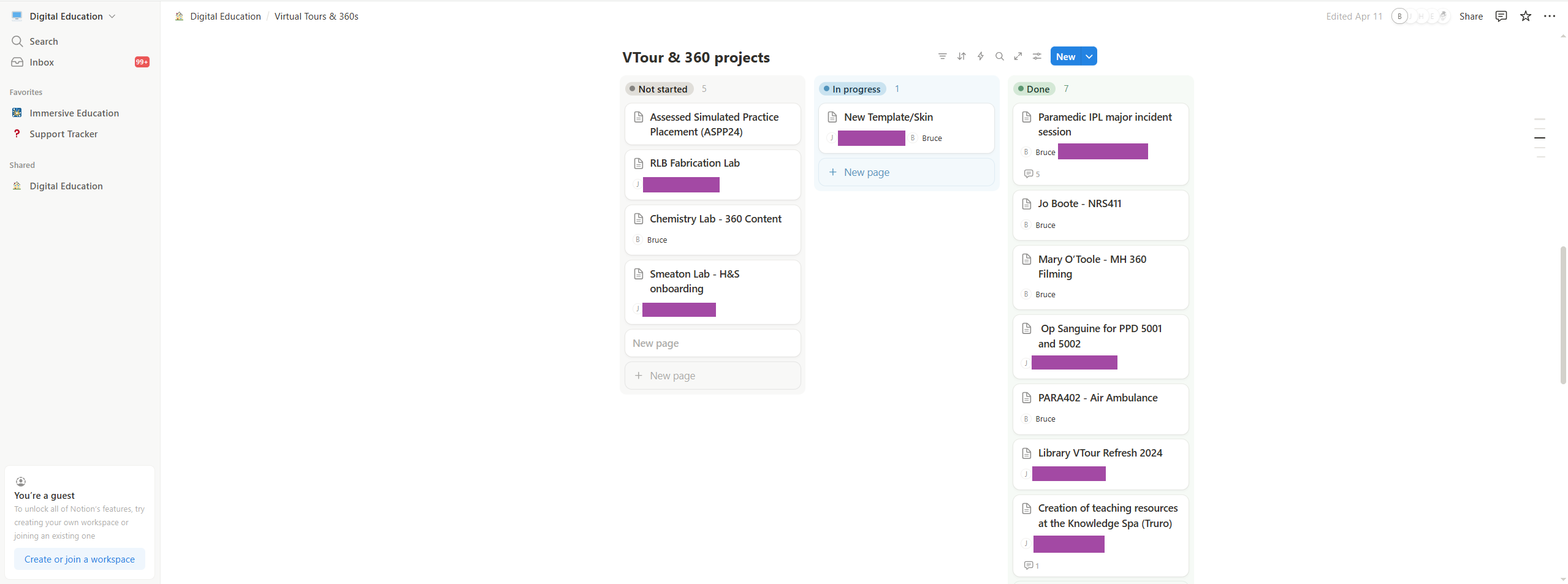
Notion – Knowledge Base Article Mapping / Projects
These screenshots show the use of Notion to collaboratively map Knowledge Base articles and manage Digital Education projects. This supports team coordination, shared understanding of priorities, and consistent communication when developing staff guidance.
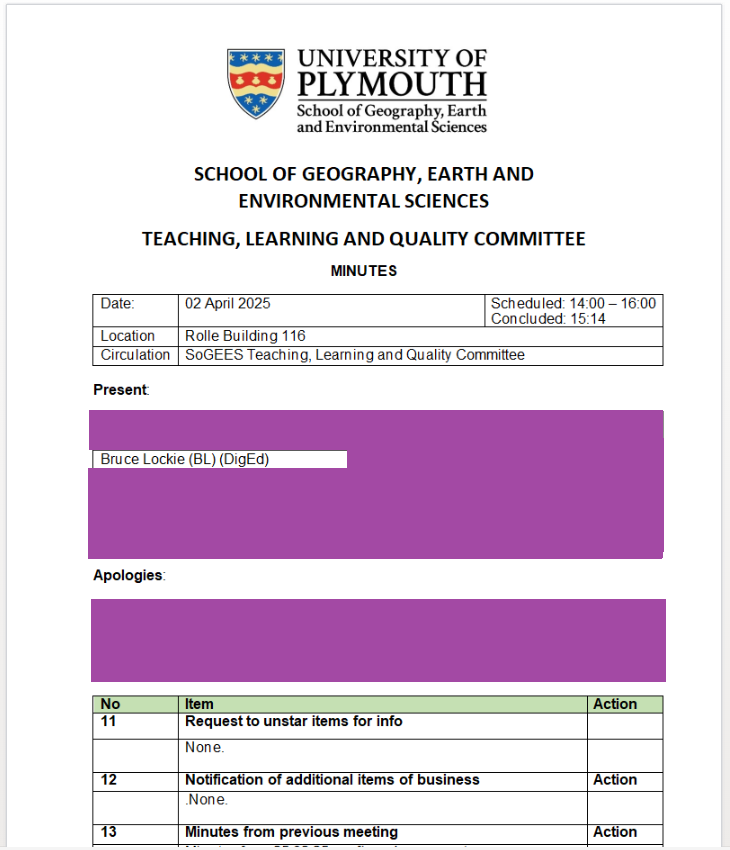
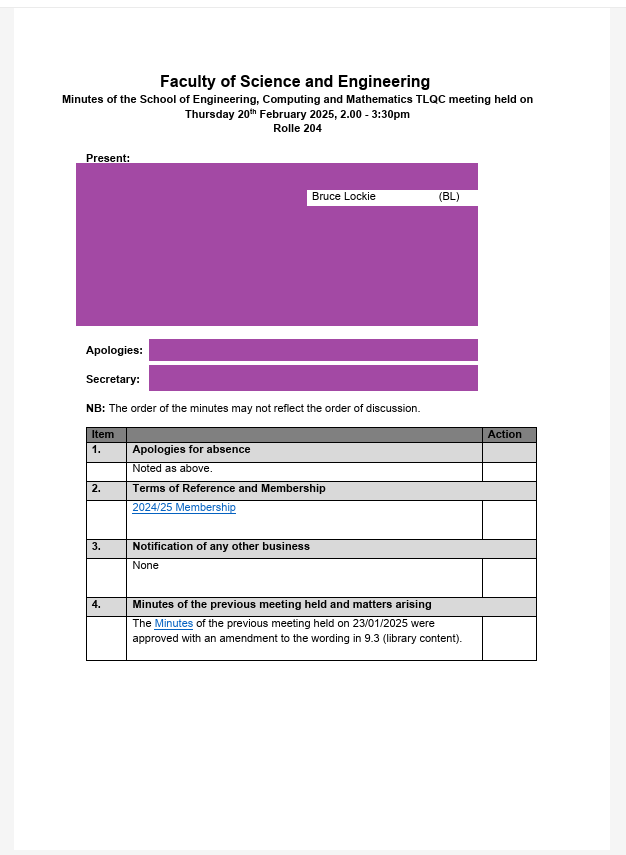
Teaching, Learning and Quality Committees
These screenshots show agendas and minutes from Teaching, Learning and Quality Committees (TLQC), where I contribute to discussions and share updates on digital learning tools and practices with academic and professional services colleagues.
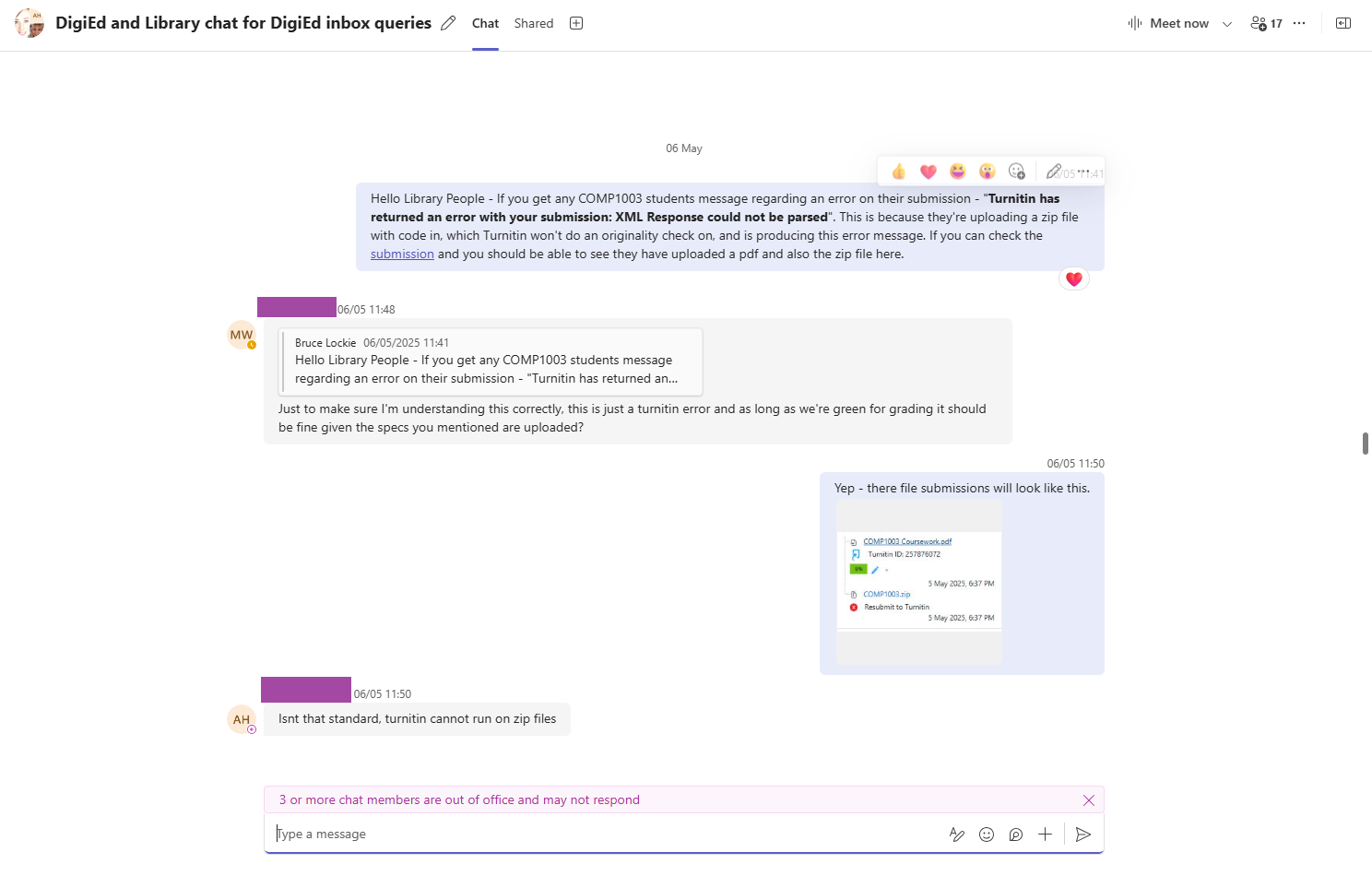
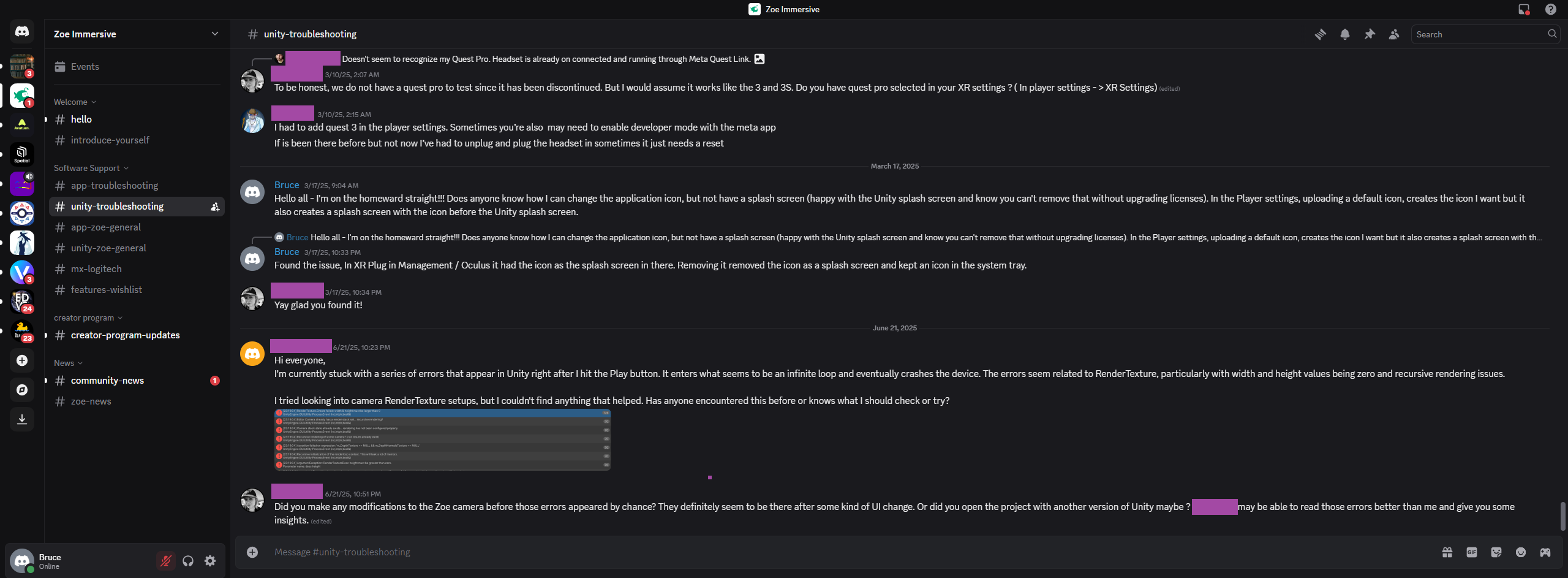
Microsoft Teams / Discord
These screenshots demonstrate my use of Microsoft Teams and Discord to support communication and collaboration. Teams is used for structured, internal coordination and documentation, while Discord supports informal, real-time discussion and knowledge sharing with external communities
Teaching and Learning Showcase & Research Abstract
The image below show my involvement in the University of Plymouth Teaching and Learning Showcase and a research abstract where I am a named author. This demonstrates my contribution to the dissemination of digital learning practice and engagement with wider academic and professional communities.
Instructional YouTube Videos
Instructional videos were created to support staff in using digital learning tools, providing clear, accessible guidance that can be accessed asynchronously.
Core Principle Values
🔴CP1: A commitment to exploring and understanding the interplay between technology and learning.
🟡CP2: A commitment to keep up to date with new technologies.
🟢CP3: An empathy with and willingness to learn from colleagues from different backgrounds and specialist areas.
🔵CP4: A commitment to communicate and disseminate effective practice.